Can You Get a Solar Permit Without an Installer? A DIY Homeowner's Guide
Short answer: yes. Your Authority Having Jurisdiction (AHJ) doesn't require you to hire a full-service installer — it requires a code-compliant, PE-stamped plan set. Here's exactly what that means if you're installing your own system.
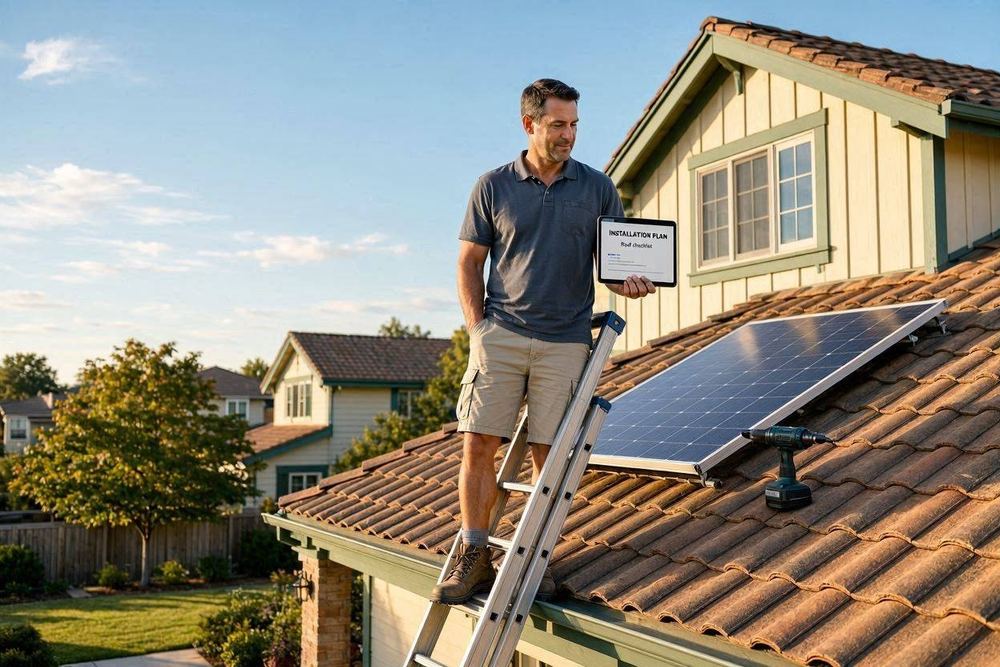
What your AHJ actually checks for
When a permit application lands on a plans examiner's desk, they're not checking whether a licensed installer's name is on the paperwork. They're checking three things: does the system meet the National Electrical Code (NEC) for your jurisdiction's adopted version, does the structural design account for wind and snow loads on your specific roof, and — in most states — is the plan set reviewed and sealed by a Professional Engineer (PE) licensed in your state.
A DIY installer who buys their own panels, inverter, and racking and does the physical installation themselves can satisfy all three of those requirements without a general contractor or solar installation company in the picture — as long as the plan set itself is done correctly.
Where DIY installers actually get stuck
The physical installation isn't usually the hard part for a homeowner who's comfortable with roof work and basic electrical. The permit package is, for three reasons:
- You need a licensed PE, and most PEs don't take one-off residential jobs. Structural and electrical engineers who stamp solar plans typically work through installers or specialized permit-design shops — not directly with individual homeowners calling around.
- The plan set has specific, unforgiving formatting requirements. Site plans, single-line electrical diagrams (SLDs), structural calculations, and equipment specification sheets all need to match your actual roof, your actual equipment, and your AHJ's exact submission format. A generic template downloaded online gets rejected.
- One rejection can cost you weeks. If your AHJ kicks the plans back — wrong load calculations, missing rapid-shutdown documentation, an SLD that doesn't match the panel datasheet — you're back in a queue, not just making a quick fix.
The real cost of a rejected DIY permit isn't the resubmission fee — it's the delay. Every week your permit sits in review is a week your system isn't earning you savings, and in some jurisdictions your interconnection application can't even start until the permit is issued.
What a stamped plan set actually includes
Whether you get it from us or anyone else, a permit-ready residential plan set should include:
- A site plan showing panel layout, setbacks, and conduit routing specific to your property
- An electrical single-line diagram matching your actual inverter, panels, and disconnects
- Structural calculations for your specific roof type, accounting for your jurisdiction's wind and snow load requirements
- A PE stamp and seal from an engineer licensed in your state
- Rapid shutdown and equipment labeling documentation per NEC 690.12
DIY + stamped plan set vs. hiring a full installer
The cost comparison is usually more favorable to DIY than homeowners expect, once you separate the engineering cost from the installation labor cost:
| DIY + stamped plan set | Full-service installer | |
|---|---|---|
| Equipment | You buy direct, no markup | Installer markup, typically 20–40% |
| Installation labor | Your own time | Included, but priced into the quote |
| Permit-ready plan set + PE stamp | $600 flat-rate (≤20 kW) | Usually bundled — you don't see this line item separately |
| Who you're dealing with | You own the whole process | Installer manages permit, schedule, and inspection |
DIY isn't the right call for everyone — it means you're the general contractor on your own roof. But for homeowners who are already planning to self-install, sourcing the engineering separately at a flat, transparent rate is usually the missing piece, not a dealbreaker.
What to have ready before you request a plan set
- Your address and utility provider (this determines your AHJ and interconnection requirements)
- Basic system specs: panel count/wattage, inverter model, battery if applicable
- A few roof photos, or at minimum roof type and approximate dimensions
With that, a residential plan set typically ships in 2–3 business days, PE-stamped, ready to submit to your AHJ — and if it gets kicked back for any reason, revisions are unlimited at no extra cost.